🎛️ What is DSP?
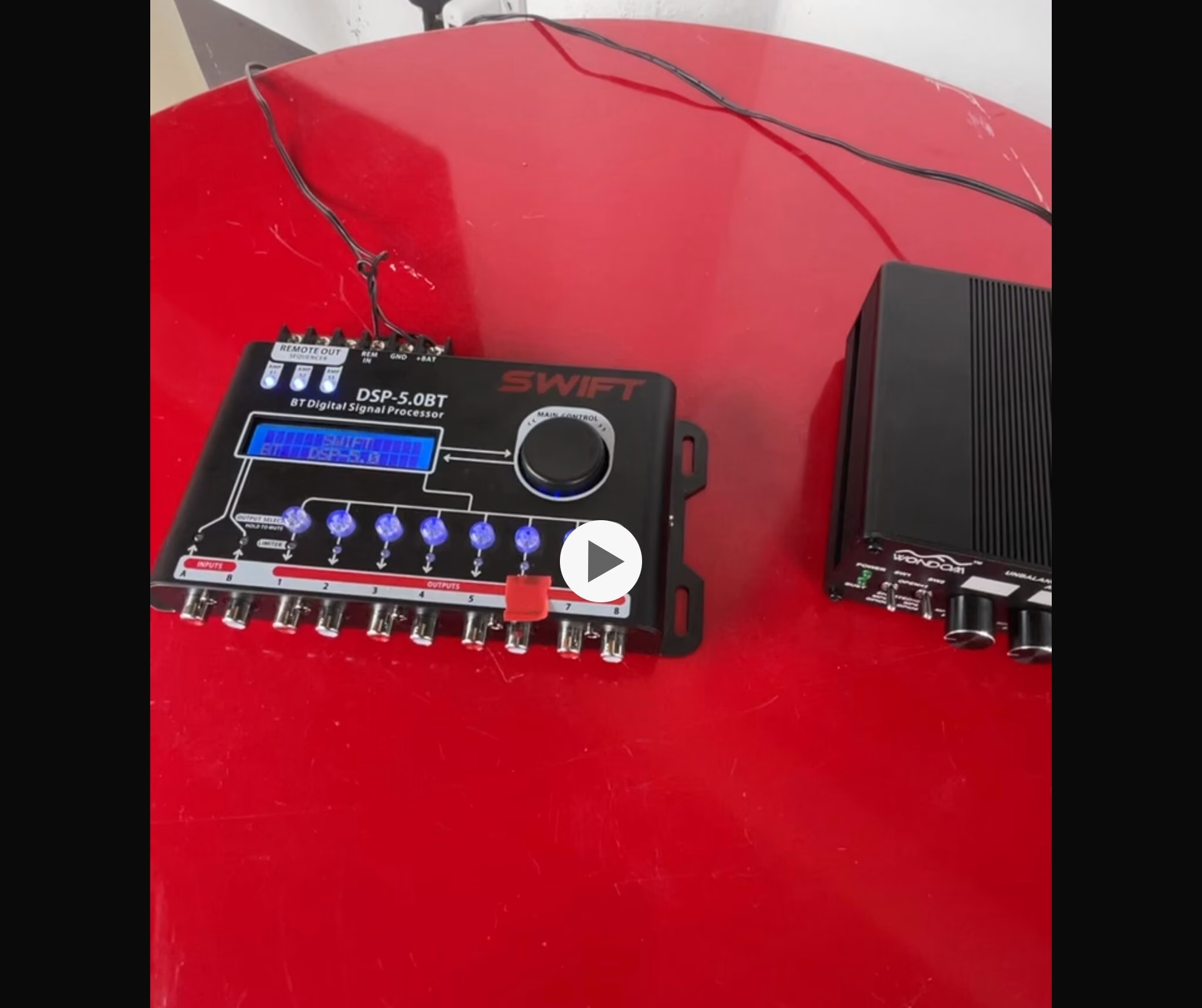
Digital Signal Processing (DSP) is the use of digital algorithms to analyze, modify, and optimize audio signals. Unlike analog EQs or crossovers, DSP works in the digital domain, giving you precise control and flexibility.
⚡ What DSP Can Do
- Equalization: Fine‑tune frequencies with surgical precision.
- Crossover Management: Split signals into sub, mids, highs digitally.
- Time Alignment: Delay certain speakers so sound arrives in sync.
- Dynamic Control: Compressors, limiters, expanders to protect and balance.
- Room Correction: Adjust sound to match venue acoustics.
- Phase Control: Correct phase issues between subs and mains.
🔗 Where DSP Fits in the Chain
Source → DSP → Amplifiers → Speakers/Subs
- In car audio: DSP replaces analog EQ + crossover, giving one box solution.
- In PA/event rigs: DSP sits after the mixer, before amps, handling EQ, crossover, and protection.
- In home audio: DSP is built into AV receivers for room correction.
🧠 When to Use DSP
- Car audio: When you want advanced tuning (time alignment, digital EQ).
- Matatu setups: To balance subs and door speakers, prevent distortion.
- Event PA: Essential for crossover, EQ, limiter, and room correction.
- Studio: For precise mixing and mastering control.
⚖️ DSP vs Analog EQ + Crossover
| Feature | Analog EQ + Crossover | DSP Processor |
|---|---|---|
| Control | Manual knobs/sliders | Software/app control |
| Precision | Limited bands | Multi‑band, parametric |
| Flexibility | Fixed functions | EQ, crossover, delay, limiter |
| Setup | Simple, plug‑and‑play | Requires programming/tuning |
| Best For | Budget/simple systems | Pro setups, advanced tuning |
- DSP replaces analog EQ + crossover.
- It handles EQ, crossover, time alignment, limiter, and phase correction in one box.
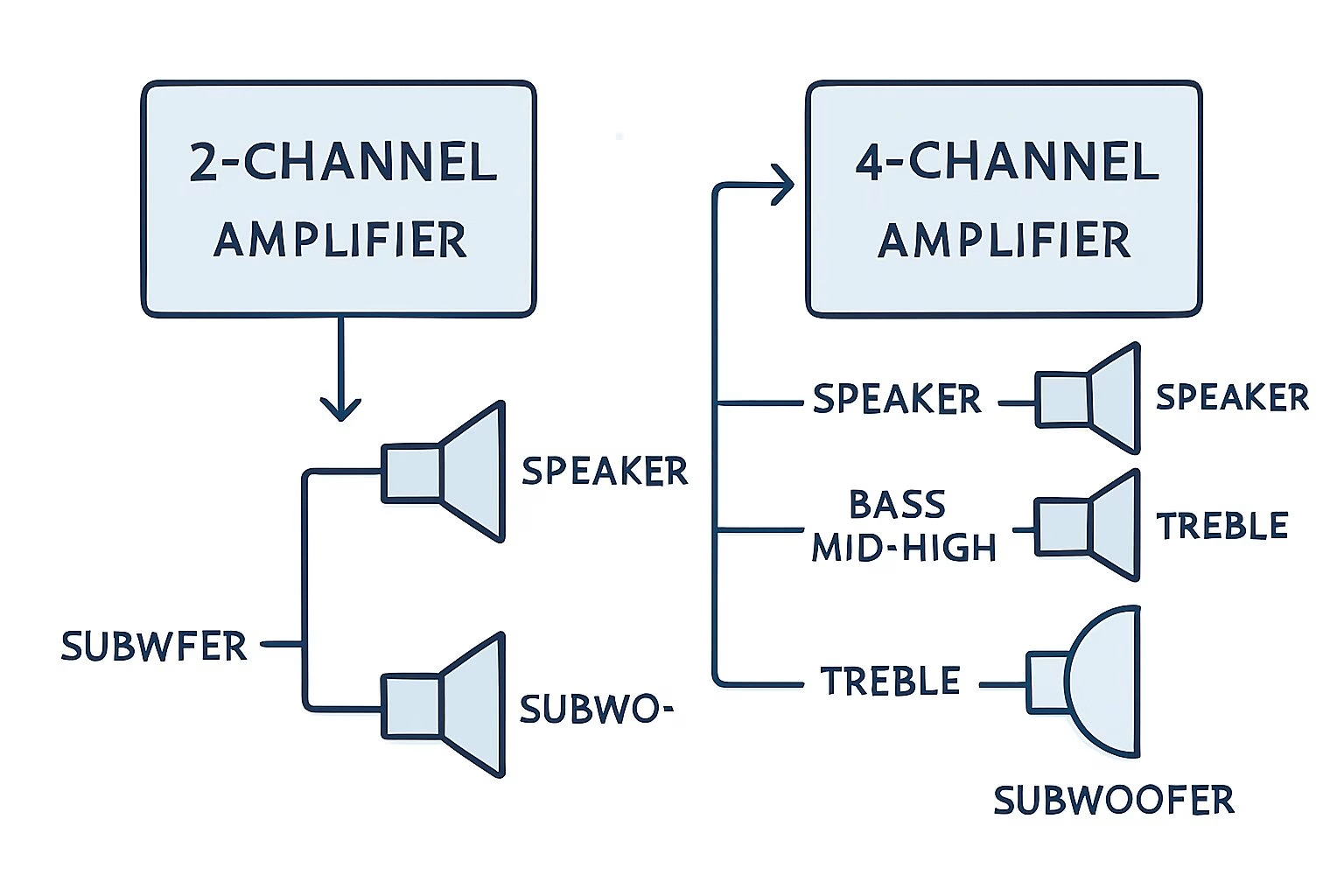
- Each output goes to the right amplifier, then to the correct speaker driver.