
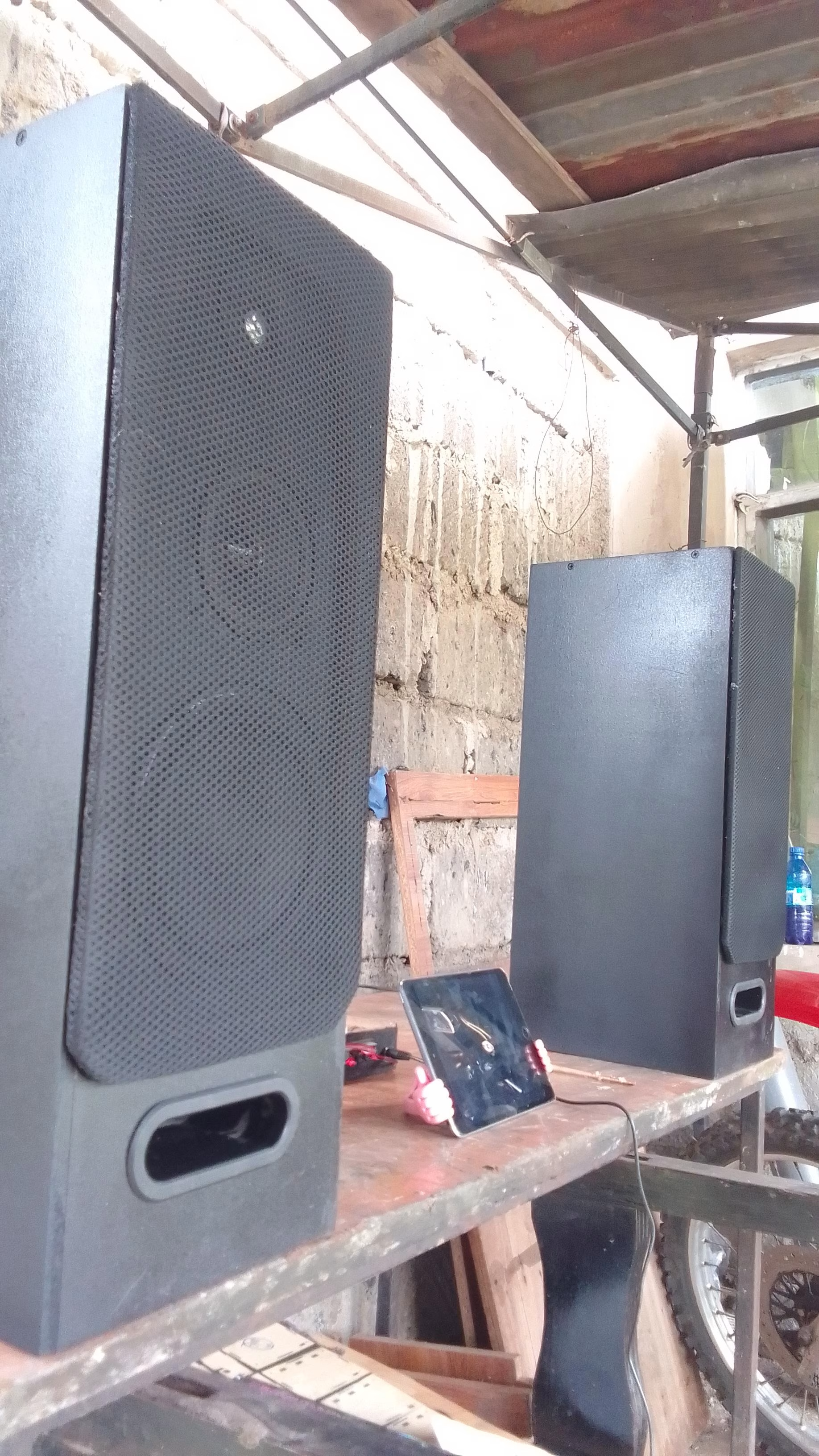

Car midrange speakers and tweeters are not recommended for home use because they are designed for small, enclosed car cabins, not large open rooms. Their impedance, sensitivity, and acoustic design often mismatch home amplifiers and spaces, leading to poor sound quality and possible damage.
🔊 Why Car Speakers Don’t Work Well at Home
⚖️ Key Differences
| Factor | Car Midrange/Tweeters | Home Speakers |
|---|---|---|
| Design Environment | Built for small, enclosed car cabins | Built for large, open rooms |
| Impedance | Often 4Ω (low) | Typically 6–8Ω (higher) |
| Sensitivity | Optimized for near-field listening | Optimized for room-filling sound |
| Power Handling | Works with car amps (12V systems) | Works with home amps (110–240V mains) |
| Frequency Response | Tuned for car acoustics, heavy bass boost | Tuned for balanced, natural playback |
| Durability | Built for vibration, heat, and moisture | Built for stable indoor environments |
Sources:
🚫 Problems You’ll Face
- Impedance mismatch → Car speakers (4Ω) can overload home amplifiers designed for 8Ω, risking damage.
- Poor sound quality → Car tweeters and mids are tuned for close listening in a cabin, not for filling a living room.
- Power supply issues → Car audio runs on 12V DC; home systems run on 110–240V AC. You’d need converters, which add noise and inefficiency.
- Acoustic mismatch → Car speakers rely on cabin reflections and small space acoustics. In a large room, they sound thin or harsh.
- Durability mismatch → Car speakers are rugged against heat and vibration, but not optimized for long-term indoor fidelity.
🧠 When It Can Work
- DIY hobbyists sometimes use car speakers at home with proper impedance matching and power conversion.
- Works best for small desktop setups or garage systems, not for high-fidelity living room audio.
- Requires additional gear: DC power supply, impedance adapters, and proper enclosures.
⚡ Bottom Line
- Use car mids/tweeters in cars — they shine in that environment.
- Use home speakers at home — they’re tuned for room acoustics and safe with home amps.
- Mixing the two often leads to poor performance and risk of damage.