

🔊 2-Channel vs 4-Channel Car Amplifiers: What’s the Difference?
Here’s a breakdown to help you choose the right amp for your setup — whether you’re upgrading a matatu system, building a mobile rig, or just improving your car’s sound.
⚖️ Comparison Table
| Feature | 2-Channel Amp | 4-Channel Amp |
|---|---|---|
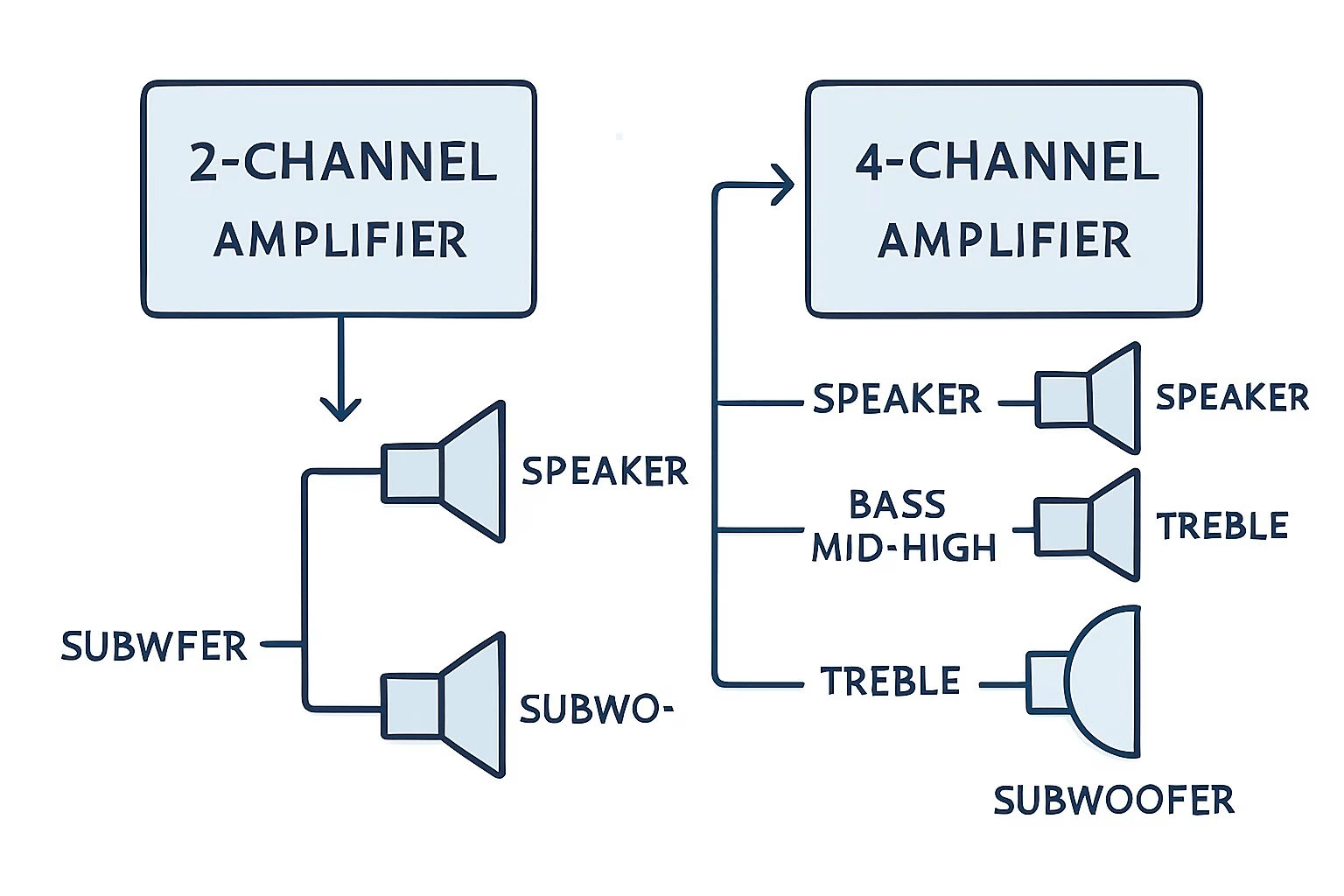
| Speaker Support | 2 speakers or 1 bridged subwoofer | 4 speakers or 2 speakers + subwoofer |
| Bridging Options | Can bridge to 1 mono channel | Can bridge to 2 channels |
| Flexibility | Limited — best for basic setups | High — supports front/rear or subwoofer |
| Cost | Usually cheaper | Slightly more expensive |
| Use Case | Small systems, basic stereo setups | Full-range systems, front/rear fade |
| Installation | Simpler wiring | More wiring, more control |
Sources:
🧠 How to Choose Based on Your Setup
- Basic stereo system (2 speakers) → Go for a 2-channel amp.
- Front and rear speakers → Choose a 4-channel amp for full control.
- 2 speakers + subwoofer → Use a 4-channel amp, bridge rear channels for sub.
- Subwoofer only → Bridge a 2-channel amp for mono bass power.
🔧 Bridging Explained
Bridging combines two channels into one more powerful mono channel:
- 2-channel amp → bridge for subwoofer
- 4-channel amp → bridge rear channels for sub, use front for speakers
🚗 Real-World Example (Kenyan Context)
- A matatu with 2 door speakers and 1 subwoofer:
→ Use a 4-channel amp, bridge rear channels for sub, front channels for speakers. - A small car with just 2 speakers:
→ A 2-channel amp is enough.
⚠️ Tips Before Buying
- Match amp power to speaker RMS ratings.
- Check impedance compatibility (ohms).
- Use quality wiring to avoid distortion.
- Consider future upgrades — a 4-channel amp gives more room to grow.